Titan lists architectural, finishing, industrial maintenance, corrosion control, cold applied roofing, waterproofing and marine protective coatings as PowrCoat applications, and builds the series for low-VOC, high solids and abrasive coatings. Titan does not match specific coatings to specific models, so the coating maker's data sheet decides the pressure, tip and thinning.
Titan's list
The PowrCoat is Titan's air-powered airless line: a compressed-air motor drives a piston pump that multiplies air pressure by the model's ratio. Titan describes the series as built for low-VOC, high solids and abrasive coatings, and names these applications:
- Architectural coatings
- Finishing
- Industrial maintenance
- Corrosion control
- Cold applied roofing
- Waterproofing
- Marine protective coatings
That is a list for the series as a whole. Titan does not say which coating suits which PowrCoat model, so nothing here should be read as a promise that a particular product will spray through a particular unit. Read it as the field the series was designed for: heavy, thick, filled or protective coatings that need pressure and a pump that tolerates wear.
Why the pump suits tough coatings
Titan calls the PowrCoat fluid section Severe Service, and says the term means twice the life with half the maintenance. Those are Titan's words, and we do not turn them into hours or gallons, because Titan publishes no packing or fluid section life. What Titan lists as the features behind it:
- Self-adjusting packings.
- A piston rod and cylinder with hard-chrome plating that Titan describes as the hardest and slickest wear surface in the industry.
- Tungsten carbide valve seats with hardened steel check balls.
- A piston engineered for chemical and solvent resistance.
- A long, slow-stroking piston.
Titan also lists a standard high-capacity outlet filter with 3/8 in. and 1/4 in. outlets, 16 in. pneumatic tires, a crane hook and a hose rack that holds up to 200 feet of 1/2 in. hose. Titan's recommended use for the series is 500+ gallons per week. If you want the Severe Service parts mapped to the diagrams, our Severe Service guide goes through them.
Choosing by the coating's data sheet
The coating maker, not the sprayer maker, decides what pressure, tip size and thinning a material needs. Before you commit to a model, collect these from the data sheet and the sprayer's manual:
The pressure the coating needs
The data sheet gives the working pressure range. On a PowrCoat, fluid pressure is the ratio times the air pressure, for example 40:1 times 100 psi gives 4000 psi, so the ratio sets the ceiling for a model.
The tip size and fan the coating calls for
Thicker coatings generally need larger orifices, and fine finishes use smaller ones. Within each air-motor size, Titan's maximum delivery drops as the ratio rises, so check delivery against the job.
Thinning limits
Thin only as the coating manufacturer allows.
Strain and stir
Strain and stir the coating before you spray. A filter that clogs on lumps or skin costs you pressure and time.
Hose, gun and tip ratings
Never run any component above the lowest working-pressure rating in the system, and use only airless-rated, conductive hose as the manufacturer specifies.
The series page and manuals are where model limits live. Our manuals page has the operating manuals, and the PowrCoat series parts page lists every model's diagrams.
What it is not for
A PowrCoat is not Titan's fine-finish line. Titan lists cabinets, furniture, doors, trim and small metal finishing among the AirCoat applications, its air-assisted airless line. Air-assisted airless combines fluid pressure with a small amount of air for finer atomisation at lower fluid pressure, and Titan aims the AirCoat 423 and 620 at small to medium wood and metal finishing shops. The AirCoat range is on the AirCoat spray system page.
At the other extreme, Titan's hydraulic-drive Hydra sprayers are the line built for high-volume, heavy and protective coatings. If your work is large and you have no compressor on site, that is a different machine to look at, with its own parts diagrams.
Filters and tips matter for these coatings
Thick, filled and abrasive coatings are hard on the parts that touch them. A worn tip has a wider orifice, so pressure falls, the pattern gets coarse and more paint is used. Partly blocked filters cause pressure loss, pulsing and spitting. On a PowrCoat that means three places to look: the gun filter, the outlet filter and the inlet screen on the suction set.
- 920-004 50 mesh filter element and 920-005 manifold filter, on the 730 to 975 high-pressure filter pages such as the 975.
- 0533514 filter element and 0533515 filter support, on the 630 and the 1045 to 1072 filter pages.
- 0509762A inlet screen on the 730 to 975 suction side.
- 178-001A upper packing set (the 730 and 940 pump) and 944-904 bleed valve seat, the wear items on that group.
If you are spraying abrasive material, check your filter elements more often than you would with a thin paint, and flush the sprayer after every use. Never leave a coating to dry in the pump, hose or gun. The 1064 fluid pump page shows what sits inside a larger model's pump.
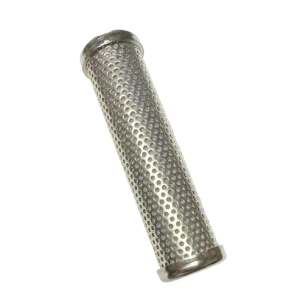
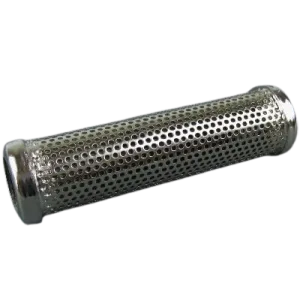
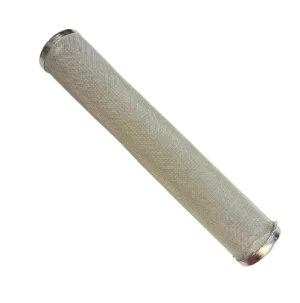
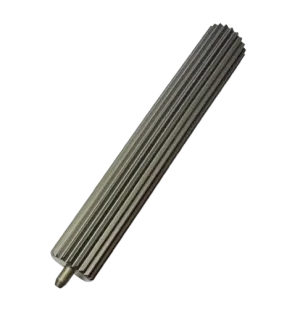
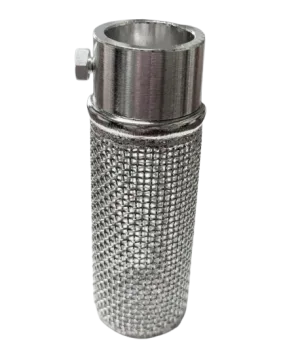
Filter, screen and pump parts for working with tough coatings:
 −8%
Next step
If you are comparing models, our guides to the 940, 960 and 975 and to the 1045, 1064 and 1072 set out ratio, pressure and delivery side by side. If you already own one, open the model's diagram and match the numbered callout, or call (713) 931-0006 with the model and serial number.
The Short Version
Titan lists architectural, finishing, industrial maintenance, corrosion control, cold applied roofing, waterproofing and marine protective work for the PowrCoat. It does not match coatings to models, so read the coating's data sheet for pressure, tip and thinning, and keep filters and tips fresh.
Not sure which PowrCoat part you need?
Call (713) 931-0006 with your PowrCoat model and serial number and our parts team will help match the part before you order.
(713) 931-0006Order by Parts Diagram