
Airless sprayer pumps don't quit without warning. In nearly every case, the machine signals trouble for weeks before it actually fails — the question is whether you catch it on your schedule or the job's. Here are the five signs worth acting on immediately, and what each one is telling you about the condition of your fluid section.
- Sign 1 — Pressure That Pulses While You're Spraying
- Sign 2 — Material Leaking from the Wet Cup
- Sign 3 — Priming Takes Much Longer Than It Used To
- Sign 4 — Visible Scoring or Pitting on the Piston Rod
- Sign 5 — Output Has Dropped at the Same Pressure Setting
- Repair vs. Replace — The Practical Framework
- The One Habit That Prevents Most of This
Sign 1 — Pressure That Pulses While You're Spraying
Rhythmic thick-thin-thick variation in the spray pattern
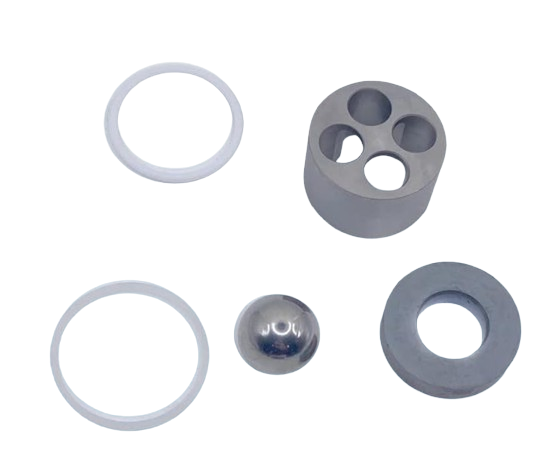
A healthy sprayer holds consistent pressure at the gun. If the spray pattern is pulsing, the pump is not maintaining even pressure between strokes. This is almost always a valve problem — the inlet valve is not sealing on the downstroke, or the outlet valve is allowing backflow between cycles. Catch this early and it is a simpler repair. Ignore it and the compromised valve accelerates packing wear significantly.
Sign 2 — Material Leaking from the Wet Cup
Coating material visible in or around the wet cup area
The wet cup holds pump armor that lubricates the piston rod packing. Coating material appearing in or around it means the packing has worn past the point where it can seal effectively. Worn packing means the pump works harder for the same output, the motor runs hotter, and the rod wears faster. Do not simply top off the wet cup with solvent and keep running. Follow the pressure relief procedure in your manual before any service.
Sign 3 — Priming Takes Much Longer Than It Used To
Holding the trigger much longer than usual before consistent pressure builds
A pump in good condition primes in seconds. Extended priming time means volumetric efficiency has dropped. Before assuming it is the pump, clean the suction filter and check the suction hose for hairline cracks near the fittings — air leaks upstream of the pump produce this symptom and are often the simplest fix. If the suction system is clean, inspect the valves and packing.
Sign 4 — Visible Scoring or Pitting on the Piston Rod
Roughness or drag when running a fingernail perpendicular to the rod
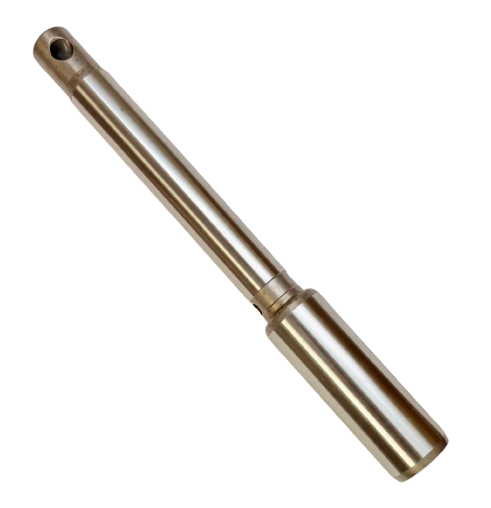
The piston rod must be perfectly smooth — any roughness acts like sandpaper on the packing every single stroke. Rod damage comes from running the wet cup dry, pumping abrasive material without a strainer, or continuing to run after packing has already failed. Never install fresh packing on a scored rod. The new packing will be destroyed in a fraction of its expected service life.
Sign 5 — Output Has Dropped at the Same Pressure Setting
Same material, same pressure, noticeably less coverage per pass
The pump is delivering less volume per stroke — worn valves and packing are letting material bypass rather than reach the gun. Before assuming pump failure, swap to a new tip of the correct size. Tip wear produces a similar symptom and is a simpler fix than a pump rebuild. If output stays low with a fresh tip, the pump fluid section needs service.
The full range of airless sprayer parts — packing kits, inlet and outlet valves, piston rods — is listed at AllTitanParts.com. Orders received before 12:00 p.m. Eastern on a business day are treated as received that day. Most available items are processed for shipment within about 1-2 business days, and delivery is roughly 4-5 business days after shipment. Some items are ordered from the manufacturer after you order, so availability shown does not always mean an item is on a shelf, and all dates are estimates. See shipping info.
Repair vs. Replace — The Practical Framework
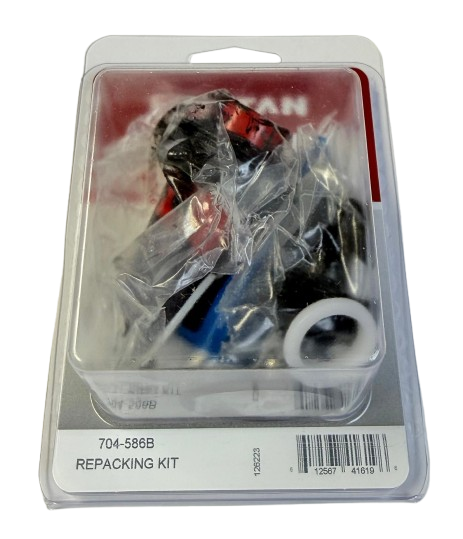
For most pumps on well-maintained machines, the answer to all five signs above is a fluid section rebuild, not a new machine. The wear components — packing, valves, rod — are designed to be serviced. A complete rebuild with OEM parts replaces the parts that wear.
Full pump assembly replacement only makes sense when there is structural damage to the cylinder bore, the machine has extremely high hours with no service history, or repeated correct rebuilds keep failing.
The One Habit That Prevents Most of This
Keep the wet cup filled with pump armor at all times during operation. Running the wet cup dry is a common cause of packing and rod damage. After that: flush completely after every job, clean the suction filter weekly, and inspect the wet cup area before every session. See the complete Titan parts list for all fluid section components.
Shop These Parts
The OEM parts referenced in this guide:
Not Sure Which Part You Need?
Give us your model and symptom and we'll confirm the exact OEM part before you order.
(713) 931-0006 Order by Parts Diagram