
The contractors who rarely deal with breakdowns aren't lucky — they're following a maintenance rhythm without thinking about it. Here's the exact daily, weekly, monthly, and annual schedule that keeps a Titan sprayer running for years instead of failing mid-job.
Maintenance on an airless sprayer is a small set of habits repeated consistently, plus a handful of scheduled component replacements. Skip the habits and you will be replacing components anyway — just at the worst possible moment, mid-job, with the crew standing around.
This schedule is written for piston-pump models that have a wet cup. Always follow the pressure relief procedure and the maintenance section in the manual for your exact model before you service anything.
Daily — Every Time You Use the Machine
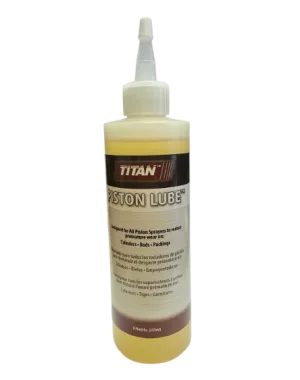
Before and after every job- Fill the wet cup with pump armor before starting — a key maintenance habit for packing and piston rod life
- Inspect the wet cup area before you start; coating material there flags a packing issue from your last session
- Flush thoroughly with the correct solvent at the end of every job — water for latex, mineral spirits for oil-based
- Run pump armor through the fluid section after flushing, especially before any storage longer than a day
Weekly — During Active Job Stretches
Quick check- Clean the suction filter and strainer — a clogged filter causes slow priming; five minutes of cleaning prevents hours of troubleshooting
- Inspect the suction hose along its full length for hairline cracks near fittings — a common, invisible cause of priming failure
- Check the spray tip for orifice wear — a worn tip lowers pressure, gives a coarse or streaky pattern and uses more paint
- Clean the manifold filter if running heavy-bodied or pigment-rich coatings
Monthly — Closer Inspection
For machines in regular use- Inspect inlet and outlet valves for scoring, pitting, or ball deformation — early valve wear is often the root cause of pressure pulsing
- Check the piston rod surface with your fingernail perpendicular to the rod — any drag means service is due
- Verify pressure consistency by spraying a test pattern and watching for pulsing at your normal operating pressure
- Check all suction path fittings for hand-tightness — vibration loosens fittings and introduces air leaks
Annual — Complete Fluid Section Rebuild
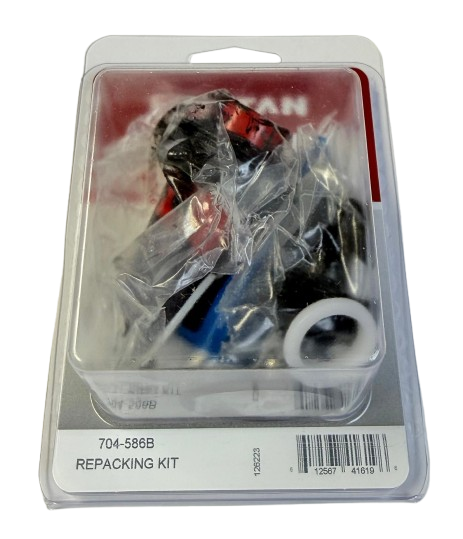
Once per season- Replace the packing regardless of visible wear after a full season of moderate to heavy use
- Replace both inlet and outlet valves together — the labor to access them is identical whether replacing one or both
- Replace the manifold filter — a filter that looks clean externally can be partially blocked at mesh level
- Inspect and replace the piston rod if any surface damage is present; never install fresh packing on a scored rod
- Test under full pressure on a test surface before the first production job of the season
Printable Quick Reference
Titan Maintenance Checklist
Daily
- Fill wet cup with pump armor
- Check wet cup before starting
- Flush with correct solvent
Weekly
- Clean suction filter
- Inspect suction hose for cracks
- Check tip wear
Monthly
- Inspect inlet/outlet valves
- Check piston rod surface
- Verify pressure consistency
Annual
- Full repack
- Replace both valves
- Replace manifold filter
What Happens When This Schedule Gets Skipped
Skip the daily wet cup habit and the packing wears sooner. Skip the weekly filter check and you will troubleshoot a slow-priming machine that was simply clogged. Skip the annual rebuild and small wear in multiple components compounds until the machine fails mid-job.
Building a Service Kit Before You Need It
The contractors who never experience emergency downtime keep a basic kit on the shelf: a repacking kit, an inlet valve, an outlet valve, a spare manifold filter, and a bottle of pump armor. When a symptom shows up on a job day, it is a quick repair instead of a lost day waiting on parts.
The complete Titan parts list at AllTitanParts.com covers every component on this schedule by model and part number, and the airless sprayer parts pages list the parts by model. Most available items are processed for shipment within about 1-2 business days (orders received before 12:00 p.m. Eastern count as received that business day). Some items are ordered from the manufacturer after you order, so availability shown does not always mean an item is on a shelf, and all dates are estimates. See shipping information for details.
Shop These Parts
The OEM parts referenced in this guide:
Not Sure Which Part You Need?
Give us your model and symptom and we'll confirm the exact OEM part before you order.
(713) 931-0006 Order by Parts Diagram