
Check the basics before ordering a part: relieve pressure, then confirm power or fuel, fluid level, strainer and filters. After that, no prime usually means a stuck or worn inlet ball and seat, lost pressure or pulsing points to balls, seats or packings, and paint at the wet cup means worn packings or a scored piston rod.
- Do these two things before any repair
- Symptoms 1 and 7: it will not start, or the engine runs and the pump does not
- Symptoms 2 and 3: it will not prime, or there is no pressure
- Symptom 4: the pump pulses or pressure will not hold
- Symptom 5: paint leaks at the wet cup
- Symptom 6 and what is not a home repair
Do these two things before any repair
Then check the obvious. Is there power or fuel, and is there coating in the bucket and fluid in the system? Many sprayer calls end here. If the cheap checks pass, use the table to find the symptom, and the sections below for the part. This guide covers faults that stop the sprayer working. If the sprayer runs but the pattern is the problem, that is a different checklist, and the answer is more often the tip.
Seven symptoms, the first check and the part usually behind each
| Symptom | First cheap check | Part usually behind it |
|---|---|---|
| 1. Will not start or run | Power supply, cord and switch; fuel, oil and low-oil alert on gas | See the manual for your model |
| 2. Will not prime | Inlet strainer, suction tube, air in the system | Inlet ball and seat |
| 3. No or low pressure | Tip, filters, hose | Balls and seats, packings |
| 4. Pulsing or pressure will not hold | Filters and tip | Lower or upper ball and seat, packings |
| 5. Leaks at the wet cup | Piston rod condition | Packings, piston rod |
| 6. Motor stalls (Hydra) | Hydraulic oil level, pressure control setting | Belt, pulley, piston or seals |
| 7. Engine runs but pump does not | Fluid level, the drive between engine and pump | Belt or pulley; see the manual |
Hydra symptoms follow Titan's Hydra manuals. For other models, follow your own manual.
Symptoms 1 and 7: it will not start, or the engine runs and the pump does not
On an electric sprayer, start with the supply, the cord and the switch. On a gas sprayer, check the fuel, the engine oil and the low-oil alert that Honda engines on Titan models carry, since the engine may be shutting down on purpose. Use your engine maker's manual for engine starting faults. The site lists complete Honda engines on its gas sprayer diagrams but not spark plugs.
When the engine runs and the pump does not move, the fault is between the two. Titan's Hydra X manual lists belt or pulley failure among the causes of a stalled motor, and the Main Assembly I page lists the gas engine timing belt, 2401594. Other models drive the pump differently, so read your own manual before taking anything apart.
Symptoms 2 and 3: it will not prime, or there is no pressure
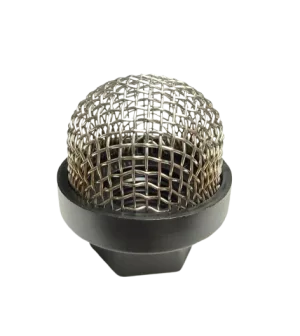
Start at the suction side. A blocked inlet strainer, a loose suction tube or air in the system all stop a pump from drawing coating. The inlet screen 700-805 lists Impact X 410, X 440 and several other models on its page. With a clear strainer, the next suspect is the lower ball. The Impact and Elite pages on titantool.com describe a Sureflo Pusher Valve that frees a stuck lower ball without a hammer, so use it as your manual describes rather than tapping the pump.
With the ball free and the pump still not priming, the inlet ball or seat may be worn. The 762-145 Inlet Valve Ball is one example listed on the site. Confirm the number against your model's diagram first. For low pressure rather than no prime, check the tip, then the filters and hose, which are the cheap causes. Titan's Hydra manuals add worn balls and seats and worn packings.
Symptom 4: the pump pulses or pressure will not hold
Titan's Hydra manuals use the stroke to tell you which ball is at fault, and the same logic applies to any piston pump. If the pump delivers on the upstroke only, the lower ball is not seating. If it delivers on the downstroke only, the upper ball or seat is the problem, and the packing should be replaced if it is worn. A pump that chatters may have an upper packing swollen by solvent.
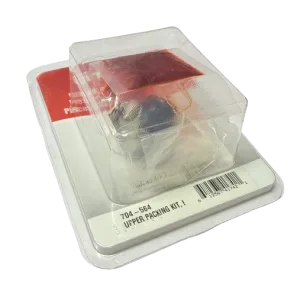
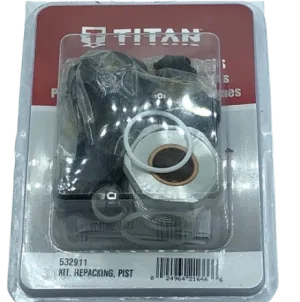
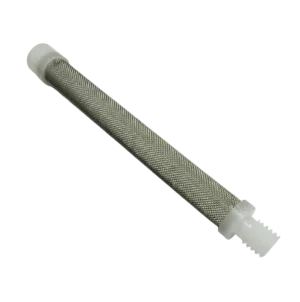
Before you open the pump, rule out the cheap causes: a worn tip loses pressure, and a blocked filter causes pulsing and spitting. The Titan Filters page lists meshes such as 540-060. With the filters and tip ruled out, work through the pump. The packings are listed on the Repacking Kits page, for example 704-564 and 0532911, which lists the Impact 340 and Impact 400. Check each kit's fitment text against your sprayer.
Symptom 5: paint leaks at the wet cup
Paint or leakage at the wet cup means the packings are no longer sealing the piston rod. The first check is the rod: it must be smooth, because a scored rod will destroy new packings just as fast as it destroyed the old ones. A scored rod needs replacing along with the packings. Rods are on the Piston Rods and Piston Assemblies page, such as 704-551A, so match the number to your model's diagram.
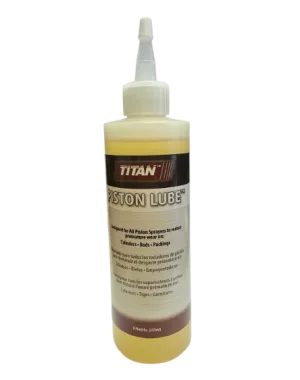
Keep the packings lubricated. The wet cup holds a throat-seal liquid for this, and on Hydra models Titan's manuals use 314-480 Piston Lube for the upper packings.
Symptom 6 and what is not a home repair
On a Hydra X, Titan's manual lists these causes for a motor that stalls or gives low or intermittent pressure: low hydraulic oil, a pressure control set too low, a belt or pulley failure, a faulty ground wire, and a piston or seal failure. Check the oil level and the pressure control setting first, since both cost nothing. The hydraulic pump itself is another matter: Titan's Hydra M and Pro IV manuals say it is not field serviceable. At that point, call us on (713) 931-0006 or follow the service manual on our manuals page.
Relieve pressure and check the basics
Power or fuel, fluid level, strainer, tip and filters.
Match the symptom to the table
Use the table above to see which parts are suspected.
Find the part on the diagram
Open your model through Order by Titan Parts Diagram and use the numbered callout.
Confirm before you order
Call (713) 931-0006 with the model and serial number if the fitment is not clear.
Parts most often behind these faults, with live pricing:


The Short Version
Relieve pressure, check power or fuel and the fluid, then check the strainer, tip and filters. Only then look at the pump: balls and seats for priming and pulsing, packings and rod for the wet cup. Hydraulic pumps are not a home repair.
Not sure which part is behind the fault?
Call (713) 931-0006 with your model, serial number and what the sprayer is doing, and our parts team will help you confirm the part.
(713) 931-0006Order by Parts Diagram