
Spraying your own house is realistic for many homeowners, but it adds work a roller does not: masking everything that must stay clean, grounding and powering the sprayer, a pressure relief and flush routine, and injection safety. Houses built before 1978 may contain lead paint, which is a real reason to bring in a lead-safe certified contractor. Decide task by task, not as one choice.
What spraying changes compared with a roller
A sprayer moves coating onto a large surface quickly, which is why Wagner lists airless for medium to large jobs such as a home exterior, a fence, a deck, interior walls and ceilings. Sherwin-Williams adds an important condition: spraying is much faster on new work where the trim is not yet installed. In an occupied room, moving furniture, masking and covering everything takes time, and rolling needs less masking.
So the sprayer does not remove effort from a repaint. It moves effort from the painting stroke to the preparation before it and the cleanup after it. That shift is the useful way to compare spraying yourself with hiring a painter: which of those tasks do you want to own?
The work that comes with a sprayer
Four jobs come with an airless sprayer, and none of them is optional.
Mask and cover
Airless spraying throws a lot of bounce-off, and it falls on everything in range. Sherwin-Williams tells you to cover anything that must stay clean. On a house that means windows, doors, trim, fixtures, plants and the ground, using tape and plastic or drop cloths. Matching the fan width to the surface also cuts overspray, according to Behr.
Set up power and grounding
Titan's Impact manuals require the sprayer to be grounded, plugged into a grounded outlet, and run on a minimum 12 gauge, three-wire extension cord with a grounded plug. You never remove the third prong or use an adapter. The Impact 440 manual also wants the pump at least 25 ft from the object you are spraying, in a ventilated area. If your sprayer is a different model, follow your manual.
Prime and test
Start-up follows the manual's sequence: siphon tube in the paint, return hose in a metal waste container, pressure at minimum, prime until paint comes out the return hose. Then test on cardboard and raise the pressure slowly only until the pattern has no heavy edges. Spraying a house before you have a clean test pattern is how streaky results happen.
Flush and clean every day
Titan's manuals say to clean the sprayer, hose and gun thoroughly after each day's use, because dried material seriously affects performance. Water is the flush for latex and mineral spirits for oil-based coatings, with the pressure relieved first. Plan time for this at the end of every spraying day, not just at the end of the job.
The Impact 440 manual says never to hang plastic to enclose the spray area, because of a static hazard, so masking means covering surfaces, not building a booth around the spray area. That is one more reason to read your sprayer's manual before the first coat. They are on our manuals page.
Safety you take on yourself
An airless sprayer works at very high fluid pressure. A jet of paint can inject fluid through the skin, and the wound can look like a small cut while being a serious medical emergency. Titan's manuals say to get immediate medical attention, to tell the doctor what the fluid was, and not to treat it as a simple cut.
Before you clean anything, change a tip or clear a clog, you also do the pressure relief procedure in your manual. Titan's Impact 440 and RX-Apex manuals say pressure is not released by turning off the motor. The steps differ by model, so use the page for your sprayer instead of one from memory. A painter who sprays every week does this by habit. A homeowner doing it twice a year needs the manual open the first few times.
Protective gear is part of the list as well: gloves, eye protection, protective clothing and a respirator or mask suited to the coating. Titan does not specify a respirator type, so follow the coating maker's safety data sheet. Wagner also recommends a painting mask or respirator whenever you spray.
Houses built before 1978
The EPA says homes built before 1978 may contain lead-based paint. That matters most when the existing paint is cracked or peeling, which is often why people repaint in the first place. Sanding and scraping that paint creates dust.
The EPA's renovation rule does not cover homeowners working on their own home, but the agency recommends hiring a lead-safe certified contractor. If you are not sure whether your house contains lead, assume it does. EPA lead-safe practice for old paint dust includes a disposable N-100 certified respirator, wet methods and HEPA vacuum cleanup. For an older house with failing paint, this is a strong reason to hand the preparation, or the whole job, to a certified contractor.
Weather and finish risks
Exterior spraying depends on the day. Wagner recommends a calm, windless day with moderate temperatures, and bounce-off is harder to control in wind. Product limits vary, so read the can or data sheet. As one example, Sherwin-Williams says Duration and Resilience can go on at 35 F, with surface, air and product temperature all at or above that figure, and that the first 48 hours matter for drying.
A sprayer also shows your equipment problems quickly. A worn tip has a wider orifice, so pressure falls and the pattern gets coarse or streaky, and it uses more paint. A tip that suits the coating and a clean filter set matter on a big wall where every flaw is visible from the street.
A fair checklist for deciding
Split the job into tasks and mark each one as yours or someone else's. There is no single right answer, and a painter does these tasks every week, which is a fair reason to pay for them.
Task-by-task split
| Task | What it involves | Questions to ask yourself |
|---|---|---|
| Preparation | Cleaning, sanding, repairing and priming; lead-safe handling on pre-1978 homes | Is the paint cracked or peeling on an older house? If so, consider a certified contractor. |
| Masking | Covering windows, doors, trim, fixtures and the ground | Do you have the time to cover everything that bounce-off will reach? |
| Spraying | Setup, test on cardboard, steady passes at the right pressure | Are you comfortable with injection safety and a manual-driven routine? |
| Cleanup | Pressure relief, flush, filter and tip cleaning, storage | Will you do this every day of the job? |
| Weather | A calm day inside the coating's temperature range | Can your schedule flex around wind and cold? |
Many homeowners keep the tasks they like and hire out the rest, such as preparation on an older house.
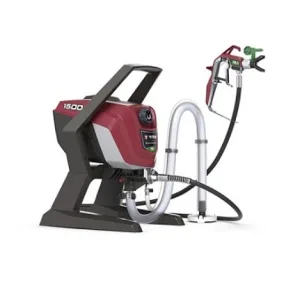
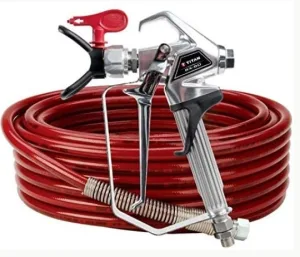
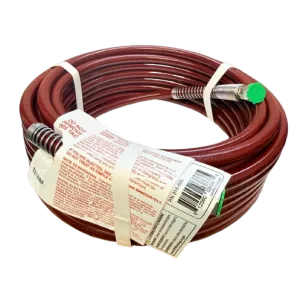
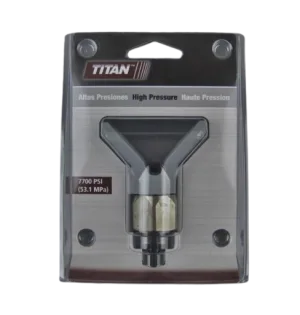
If you keep the spraying, here is what the kit looks like: a sprayer with the power it needs, an airless-rated hose, a gun with a tip guard fitted, a tip to suit the coating, filters, protective gear and cleanup supplies. The electric airless sprayer page and the sprayer ordering page list the sprayers. For a gun, hose and tip as one purchase, look at the 0538011 hose and SC-6+ tip kit, or a 316-505 50 ft spray hose and a 661-027 tip guard as spares. Titan's Impact manuals specify a minimum of 50 ft of 1/4 in. grounded airless hose.
Match the sprayer to the coating before you buy. An Impact X 440 tops out at a 0.023 in. tip, while the ControlMax 1700 tops out at 0.017 in., so a thick coating that needs a larger tip may be outside a smaller sprayer's range. For uncertain fitment, call our parts team at (713) 931-0006 with the sprayer model and serial number, or order by parts diagram once you know the model.
Sprayers and the parts that come with the first job:

The Short Version
A sprayer saves effort on large surfaces and costs effort in masking, setup, safety and daily cleanup. Pre-1978 homes with cracked or peeling paint may contain lead, and the EPA recommends a lead-safe certified contractor. Decide task by task, keep what you are comfortable with, and read your sprayer's manual before the first coat.
Planning a house repaint and not sure what to buy?
Call (713) 931-0006 with your sprayer model and serial number and our parts team will help match the parts to the job.
(713) 931-0006Order by Parts Diagram