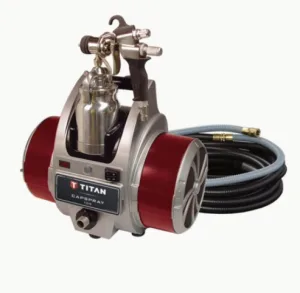
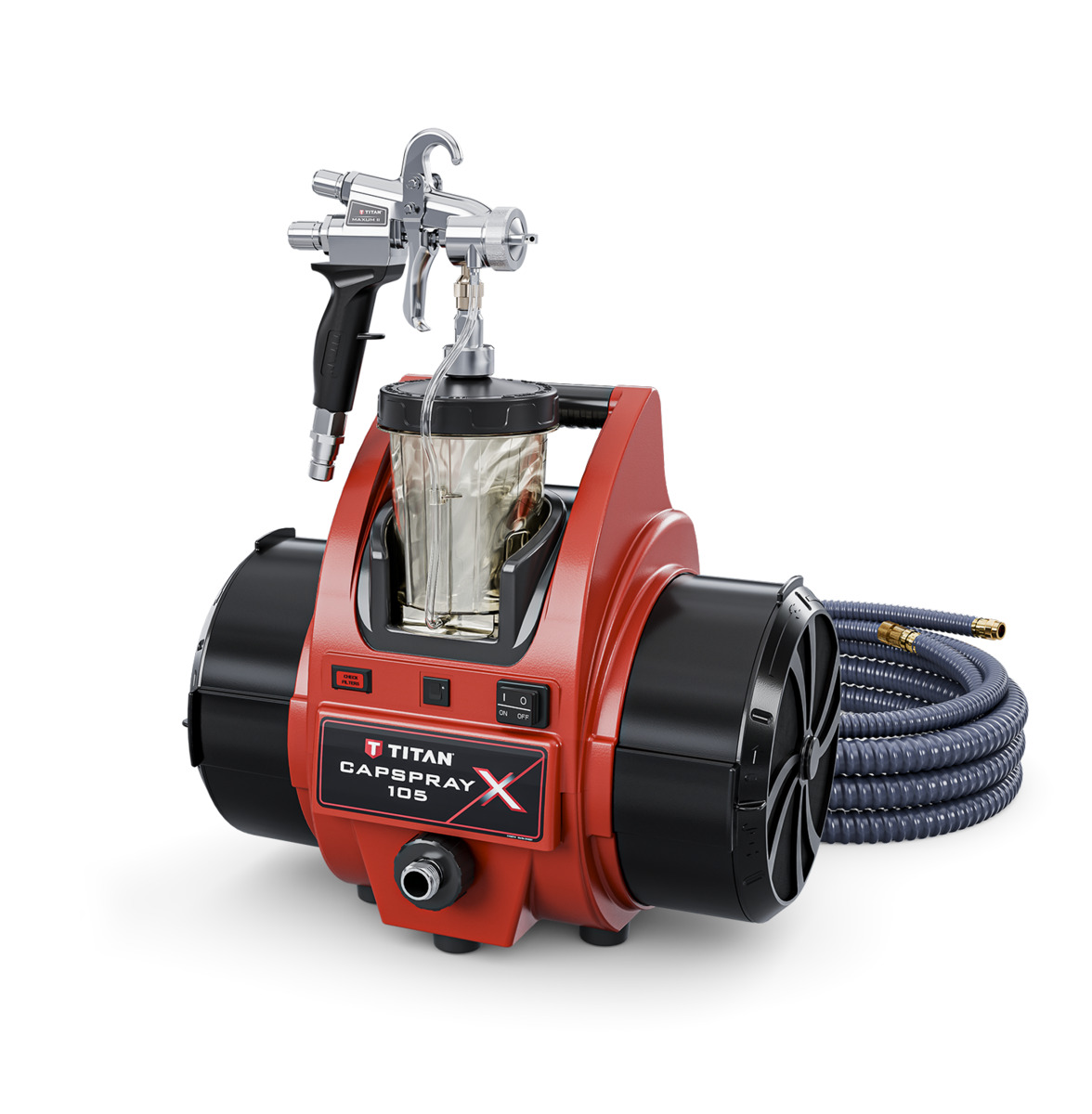
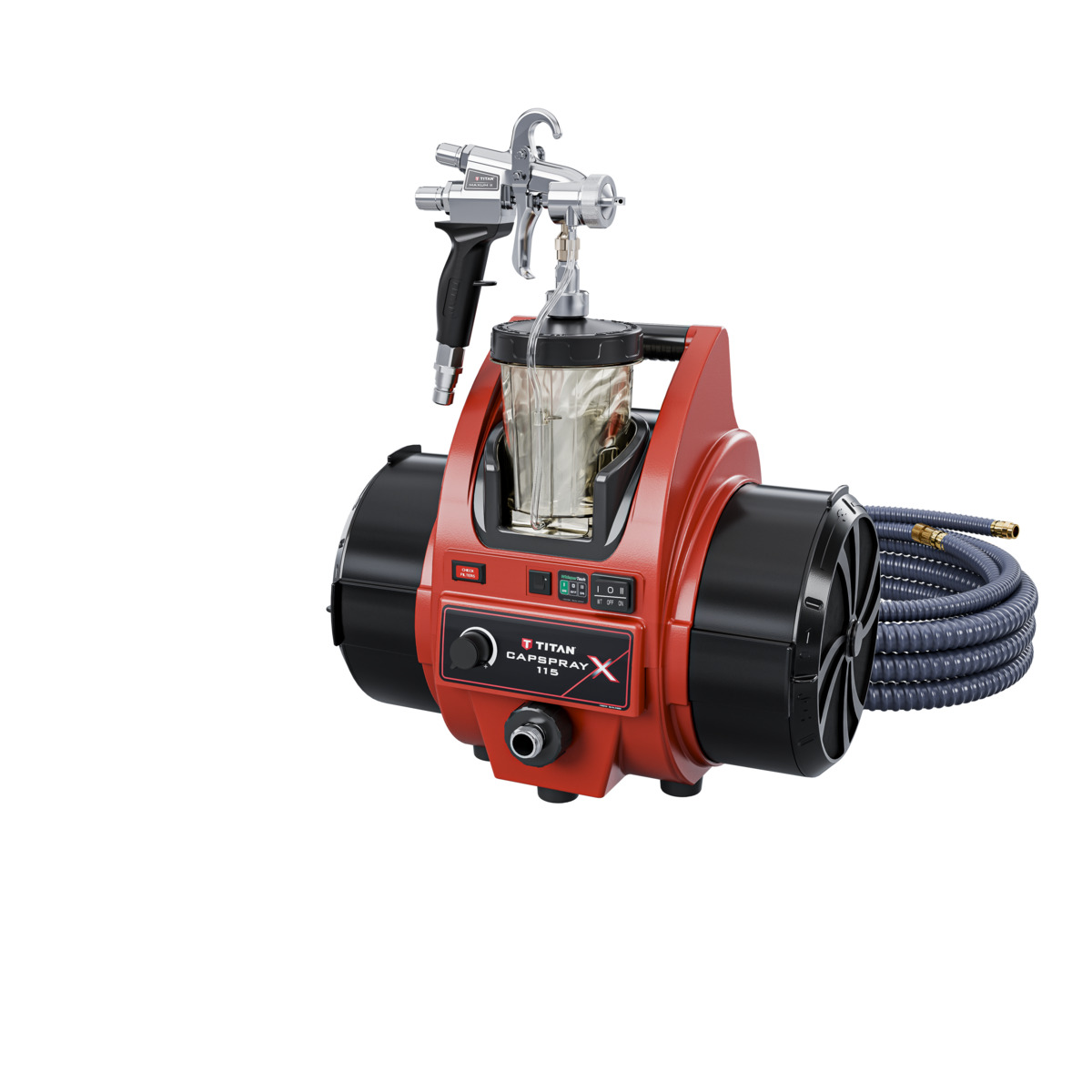
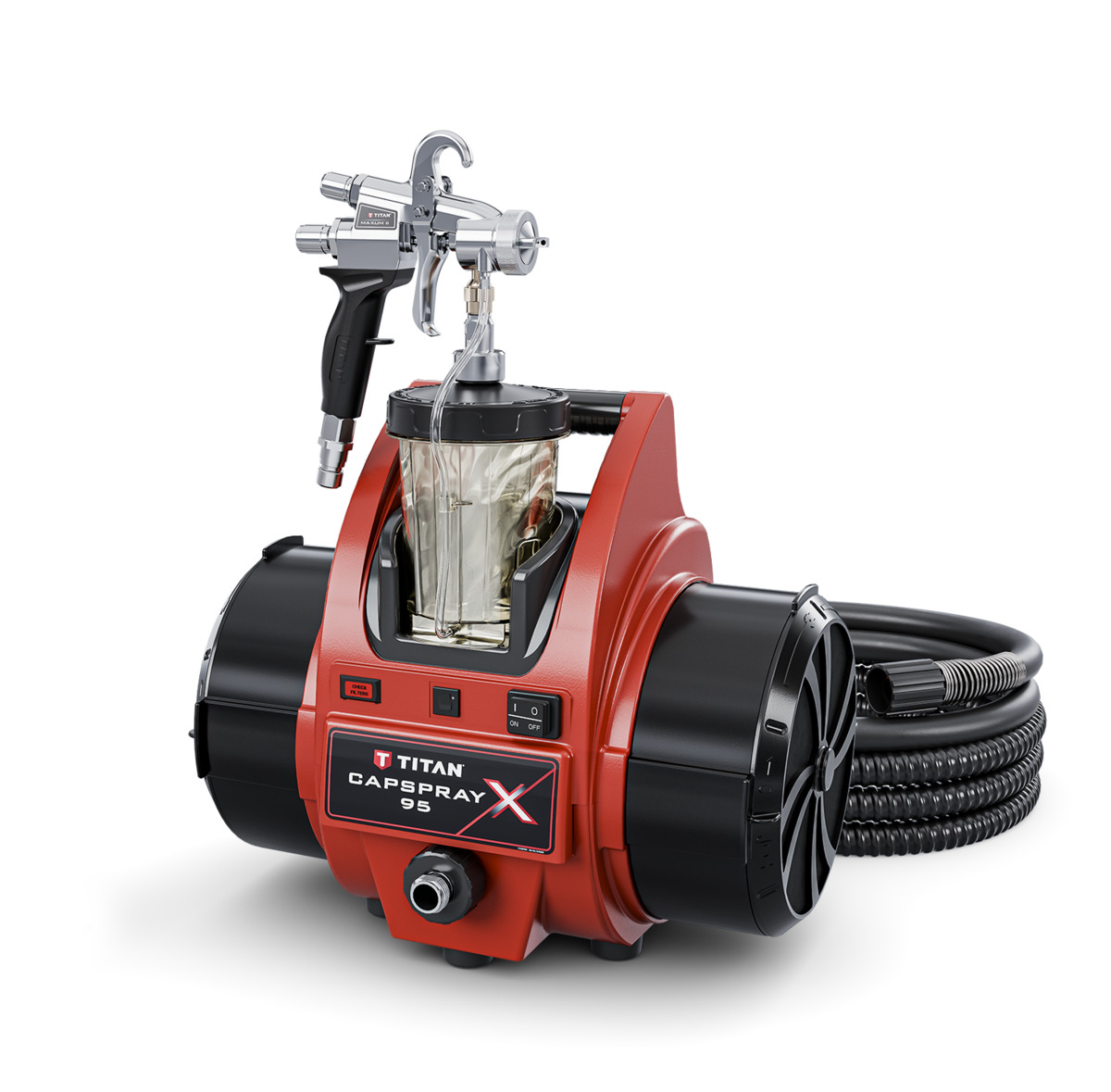
Shop Genuine OEM Titan CapSpray Series Sprayers
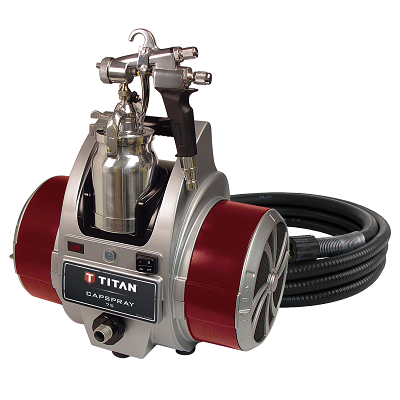
Shop genuine OEM Titan CapSpray Series HVLP paint sprayers, a dedicated line of turbine-driven fine finish systems designed for woodworking, cabinetry, and furniture finishing. CapSpray units use high-volume, low-pressure airflow to deliver smooth finishes with transfer efficiencies up to 90 percent and minimal overspray. The lineup ranges from the 4-stage CapSpray 95 to the industry's only 6-stage CapSpray 115, which atomizes thick latex or solvent-based paints with little or no thinning. Select the correct CapSpray model by matching coating requirements, viscosity, required control, and the applicable gun configuration.
Choose the Correct Titan CapSpray Model
Choosing CapSpray technology is only the first step. Individual CapSpray models combine different turbines, air pressure levels, and gun configurations, which changes atomization power and finish quality. Select by coating + viscosity + required control + gun setup + turbine stage + exact model number.
A higher-stage turbine does not automatically mean a sprayer is correct for your application, and two CapSpray units are not interchangeable simply because they share the Titan brand. The CapSpray 95 delivers 9.5 PSI for medium-size projects, the CapSpray 105 delivers 10.5 PSI for larger projects with heavier coatings, and the CapSpray 115 delivers 11.5 PSI for the most demanding finishing work. Your coating requirements, finish expectations, and production volume determine the right platform.
Titan CapSpray Series Model Guide
Titan's current CapSpray lineup spans multiple models engineered for different production levels. The chart below summarizes key specifications. Confirm the current orderable model number when selecting a sprayer, particularly where an updated packaged or suffixed number may be shown in parts channels.
| Model | Turbine Stage | Air Pressure | Gun Included | Hose Length | Weight |
|---|---|---|---|---|---|
| CapSpray 75 | 3-Stage Tangential | 7.5 PSI | Maxum II | 25 ft | 20.5 lbs |
| CapSpray 95 | 4-Stage Tangential | 9.5 PSI | Maxum II | 30 ft | 21.0 lbs |
| CapSpray 105 | 5-Stage Tangential | 10.5 PSI | Maxum Elite | 30 ft + 5 ft whip | 22.0 lbs |
| CapSpray 115 | 6-Stage Tangential | 11.5 PSI | Maxum Elite | 30 ft + 5 ft whip | 23.0 lbs |
How Titan CapSpray HVLP Technology Works
Titan CapSpray sprayers use HVLP (High Volume Low Pressure) technology to atomize coating with a high volume of air at low pressure, producing a softer, more controlled spray pattern with minimal overspray and transfer efficiencies up to 90 percent. CapSpray turbine systems use multi-stage tangential turbines to generate atomizing air, delivering warm, dry air that pushes material directly from the cup through the gun. This design minimizes bounce-back, reduces material waste, and delivers a refined surface finish.
HVLP technology delivers more coating to the surface with less waste and overspray.
Separate filters for atomizing and cooling air with automotive-quality filtration for clean, consistent airflow.
Convenient storage for needles, nozzles, air caps, and nozzle wrench.
Extends turbine life and maintains maximum performance with clean filters.
Titan also states that CapSpray systems feature sound reduction technology that lowers the decibel level on the jobsite, a built-in gun and cup holder for added storage and portability, and pre-filters on both atomizing and cooling air sides to extend filter life and simplify cleaning. The CapSpray 115 offers two-speed settings, allowing users to switch between 6-stage and 4-stage performance as needed.
Understanding CapSpray Pressure Ratings
CapSpray models range from the 4-stage 9.5 PSI CapSpray 95 to the industry's only 6-stage 11.5 PSI CapSpray 115 for maximum HVLP atomization.
CapSpray systems achieve transfer efficiencies up to 90 percent, meaning most of the coating ends up on the surface rather than lost to overspray.
Do not interpret the maximum pressure rating as evidence that a sprayer should always operate at that pressure. Titan optimizes each CapSpray model for specific coating types and finish requirements. Every pressure-bearing component in the spray system must also remain within its own working-pressure rating; the complete system is limited by its lowest-rated component.
Titan CapSpray vs Standard Airless Sprayers
| Buying Consideration | Titan CapSpray | Standard Airless Sprayer |
|---|---|---|
| Technology positioning | HVLP turbine-driven precision platform | High-pressure hydraulic atomization |
| Atomization | High volume, low pressure for soft, controlled pattern | High pressure for maximum production speed |
| Overspray | Minimal with up to 90% transfer efficiency | Higher overspray typical |
| Finish quality | Superior smoothness on detail work | Good for large surfaces, less refined on detail |
| Best application | Trim, cabinets, doors, furniture, metal | Large walls, siding, fences, production work |
| Selection | Coating + viscosity + control + gun setup | Coating + output + tip size + sprayer capacity |
CapSpray is not automatically the correct technology for every application. Choose according to the coating, desired finish, production requirements, and equipment capability.
Titan CapSpray Compatibility
Titan CapSpray sprayers work with Maxum II and Maxum Elite guns, industry-standard HVLP accessories, and Titan replacement parts. This describes the system interface; it should not be interpreted as a statement that every CapSpray configuration is suitable for every coating or application.
Confirm the turbine uses the appropriate Maxum gun and that the air cap and needle set match your coating.
Dual air filtration uses automotive-quality atomizing filters and pre-filters on both sides of the unit.
Confirm the coating manufacturer permits the selected sprayer and tip configuration.
When Should You Service a Titan CapSpray Sprayer?
CapSpray sprayers are mechanical systems with wear components. Inspect the sprayer when spray pattern loses definition, atomization becomes inconsistent, or airflow weakens. Common service items include air filters, needles, nozzles, air caps, check valves, gun seals, hoses, and turbine components. CapSpray systems feature dual air filtration with a dirty filter warning light for preventive maintenance, while Maxum guns use stainless steel needles and nozzles for durability. A general recommendation is to inspect all assemblies every 50 to 75 hours of use, with turbine assembly parts checked more frequently after every major job. Actual service intervals vary with coating abrasiveness, operating conditions, cleaning, maintenance, and usage conditions.
How to Order the Correct Titan CapSpray Sprayer
- Identify the coating and check the coating manufacturer's recommended sprayer range.
- Determine the required finish quality and control level.
- Determine the coating viscosity and whether thinning is required.
- Select the appropriate turbine stage (4-stage, 5-stage, or 6-stage).
- Confirm the gun, needle set, and air cap configuration.
- Verify the current manufacturer ordering number for the platform.
- Check documented supersession information when replacing an older model.
- Order only after the sprayer configuration, equipment capability, and current part number are confirmed.
Physical similarity, the Titan brand name, or matching model names alone do not prove complete equipment or coating compatibility.
Compare Related Titan Spraying Equipment
CapSpray is one part of Titan's broader professional spraying system. Compare the technology required for your coating and application before selecting an individual sprayer.
The safest way to select a Titan CapSpray sprayer is coating + viscosity + required control + gun setup + turbine stage + exact current model number. Choosing "CapSpray" alone is not enough: a CapSpray 95, CapSpray 105, and CapSpray 115 have substantially different atomization power and production capabilities.
FAQ Section
Use these answers to narrow the correct Titan CapSpray sprayer before ordering.