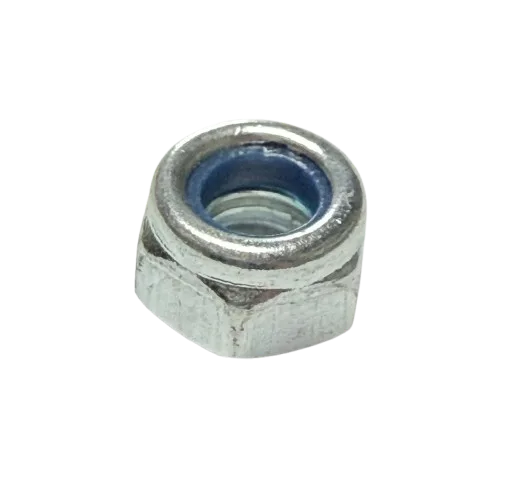
Titan 9910201 Lock Nut
SprayTech part 9910201 is a lock nut used to secure fasteners on compatible airless sprayer equipment. When vibration or operational stress threatens to loosen standard nuts, this lock nut provides prevailing torque to resist backing off. This lock nut restores proper fastener retention and reliable locking function on compatible SprayTech and Airless1 units.
| Part Number | 9910201 |
|---|---|
| Part Description | Lock Nut |
| Brand | SprayTech / Airless1 |
| Fits | Spraytech ED655; Spraytech Airless EP2205; Spraytech Airless EP2105; Airless1 G10; Airless G10; Airless G10 TR2 |
| Condition | New |
Lock Nut for SprayTech and Airless1 Airless Sprayers
Part number 9910201 is a genuine OEM lock nut designed specifically for use across a range of SprayTech and Airless1 airless sprayer equipment including ED655, EP2205, EP2105, and G10 series models. This lock nut serves a critical role in maintaining fastener integrity on assemblies subject to continuous vibration, pressure cycling, and operational stress. Unlike standard nuts that rely solely on thread friction, this lock nut incorporates a locking mechanism that creates consistent prevailing torque, resisting loosening even under demanding sprayer operating conditions. When original lock nuts become worn, stripped, or lose their locking capability, replacing them with factory-specified hardware restores proper clamp load and prevents fastener back-out that could lead to misalignment, fluid leaks, or equipment downtime.
Airless sprayers generate significant pulsation and vibration during operation, particularly at the pump and motor assemblies. Standard fasteners can gradually loosen under these conditions, compromising assembly integrity and potentially creating safety hazards. A lock nut that has lost its prevailing torque characteristic may spin freely onto threads without resistance, indicating the locking feature is no longer effective. Replacing a worn lock nut with OEM part 9910201 restores the designed locking performance, ensuring that critical fasteners remain securely in place. Proper torque specifications should always be followed during installation, and the mating bolt or stud should be inspected for thread damage before reassembly.
What it does and when to replace it
| Vibration resistance | Provides prevailing torque that resists loosening from pump pulsation and motor vibration during sprayer operation |
|---|---|
| Clamp load retention | Maintains specified clamping force over time, helping prevent fastener relaxation and joint separation |
| Assembly integrity | Secures critical components such as pump housings, motor mounts, and manifold assemblies |
| Lost prevailing torque | Nut spins freely onto threads without resistance, indicating locking feature is worn or damaged |
|---|---|
| Stripped or cross-threaded | Threads are damaged, preventing proper torque application or reliable fastening |
| Corrosion damage | Rust or chemical exposure has compromised the nut's structural integrity or thread condition |
| Repeated loosening | Fastener consistently backs off during operation despite proper installation torque |
Compatibility
Part number 9910201 is compatible with the following equipment models. Always confirm fitment using the correct parts diagram for your exact model and revision to ensure proper application.
| Equipment Model | Component Application |
|---|---|
| Spraytech ED655 | Lock nut for fastener retention on pump and frame assemblies |
| Spraytech Airless EP2205 | Lock nut for fastener retention on pump and frame assemblies |
| Spraytech Airless EP2105 | Lock nut for fastener retention on pump and frame assemblies |
| Airless1 G10 | Lock nut for fastener retention on pump and frame assemblies |
| Airless G10 | Lock nut for fastener retention on pump and frame assemblies |
| Airless G10 TR2 | Lock nut for fastener retention on pump and frame assemblies |
Related parts commonly serviced together
Lock nut replacement is often part of broader service work. When replacing a lock nut, these components are frequently inspected or replaced to ensure complete and reliable repairs.
Inspect the corresponding threaded fastener for thread damage, stretching, or corrosion that could affect proper lock nut engagement and torque retention.
When used in combination, washers should be inspected for deformation, wear, or corrosion that could alter clamp load distribution.
Check bracket surfaces and mounting holes for wear, distortion, or damage that could prevent proper fastener seating and clamp load.
Frequently Asked Questions
No reviews yet. Be the first to review this product!