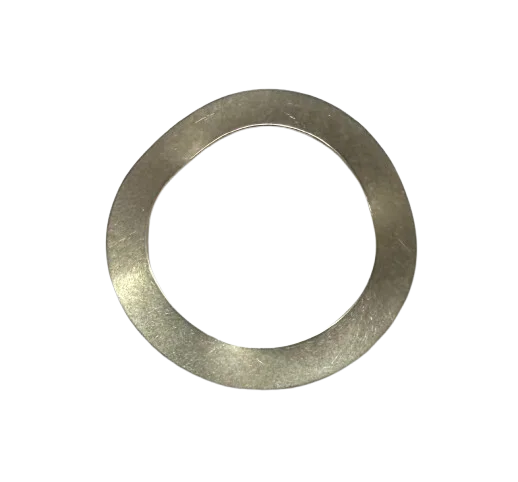
Titan 9894242 Wave Spring Washer
Genuine OEM wave spring washer designed to maintain axial tension and compensate for thermal expansion, vibration, and component wear in critical assemblies. This wave spring washer provides consistent preload to help prevent loosening of fasteners and maintain proper alignment of mating components. When original washers become compressed, fatigued, or lost, replacement with factory-specified hardware restores correct clamping force and operational reliability.
| Part Number | 9894242 |
|---|---|
| Part Description | Wave Spring Washer |
| Brand | Spraytech |
| Fits | Spraytech HVLP Maxum II |
| Condition | New |
Genuine OEM Wave Spring Washer for Spraytech HVLP Maxum II
Part number 9894242 is a genuine OEM wave spring washer engineered specifically for use in Spraytech HVLP Maxum II spray equipment. Wave spring washers differ from standard flat washers in that they incorporate a contoured, wavy design that functions as a spring element when compressed. This unique geometry allows the washer to apply continuous axial force between fastened components, effectively maintaining preload even as thermal cycling, material settling, or vibration attempt to loosen the assembly. In HVLP spray systems, where consistent sealing pressure and component stability directly impact atomization quality and finish results, proper spring washer function is essential.
Over time, original wave spring washers can experience fatigue, permanent compression, or corrosion, resulting in reduced clamping force. When this occurs, fasteners may gradually loosen, seals may lose their required compression, and critical alignment between components such as fluid passages, air caps, or internal valving can shift. These conditions often manifest as inconsistent spray patterns, fluid leakage, or difficulty achieving proper system pressure. Replacing a worn or damaged wave spring washer with factory-specified part 9894242 restores the designed spring rate and preload characteristics, ensuring that all assembly tolerances remain within original specifications.
Installation of this wave spring washer should follow the service procedures outlined in the equipment manual. Proper orientation of the wave pattern relative to mating surfaces, correct torque application to the associated fastener, and inspection of adjacent components for wear are important considerations. Using OEM hardware eliminates guesswork regarding material composition, spring rate, and dimensional accuracy, providing predictable service results and reducing the likelihood of repeat failures in the same location.
What it does and when to replace it
| Axial preload maintenance | Provides continuous spring force to keep fasteners under tension despite thermal expansion, vibration, or material compression |
|---|---|
| Vibration resistance | Absorbs dynamic movement to help prevent threaded connections from loosening during operation |
| Seal compression support | Maintains consistent pressure on seals and gaskets to help prevent fluid or air leakage in critical assemblies |
| Permanent compression | Washer no longer retains its wave shape when removed, indicating loss of spring tension |
|---|---|
| Fatigue or cracking | Visible cracks, deformation, or material separation that compromises structural integrity |
| Corrosion damage | Rust or chemical attack has altered the washer's dimensions or surface condition |
| Repeated loosening | Fastener requires frequent retorquing, suggesting insufficient preload retention |
Compatibility
Part number 9894242 is compatible with the following equipment model. Always confirm fitment using the correct parts diagram for your exact model and revision to ensure proper application.
| Equipment Model | Component Application |
|---|---|
| Spraytech HVLP Maxum II | Wave spring washer for fastener preload and axial tension maintenance |
Related parts commonly serviced together
Spring washer replacement is often part of broader service work. When servicing a wave spring washer, these components are frequently inspected or replaced to ensure complete and reliable repairs.
The bolt, screw, or nut associated with the wave spring washer should be inspected for thread damage, stretching, or corrosion that could affect torque retention.
In assemblies where the wave spring washer provides compression for sealing elements, the corresponding seal or gasket should be inspected for wear or permanent set.
The housing, cover, or bracket that interfaces with the wave spring washer should be checked for surface damage, warping, or wear that could affect proper preload.
Frequently Asked Questions
No reviews yet. Be the first to review this product!