
Poor atomization is rarely one fault. Check in this order: coating that is too thick or unstrained, a worn or oversized tip, clogged filters, low atomizing air on air-assisted machines, then gun seals and pump valves. Tips and filters cost the least and fix the most, so start there before opening a pump.
A fine finish sprayer is judged on its pattern. When a stain, lacquer or enamel comes out coarse, spits, or leaves streaks, the cause is usually small and cheap, and the expensive guess (the pump) is usually wrong. The order below runs from checks that cost nothing to the ones that mean taking something apart. It applies across the Titan fine finish line, and it names the parts the site lists for the MultiFinish 440, the GM 3600 gun and the FlexSpray Handheld.
Symptom, likely first cause and where to look
| What you see | Check first | Then |
|---|---|---|
| Coarse or orange-peel pattern | Coating too thick, tip worn or too large | Tip, then air pressure on air-assisted machines |
| Spitting or pulsing | Partly blocked filter or strainer | Gun filter, manifold filter, suction filter |
| Pressure falls, pattern gets rough | Worn tip | New tip, then pump valves |
| Weak air, poor atomizing air | Air regulator set too low | Compressor filter element, air valve in the gun |
| Little or no flow (FlexSpray) | Clogged nozzle or suction tube | Flow setting, seals, container pressure |
This is a starting order, not a diagnosis. No single cause fits every machine.
Start with the coating and the cheap checks
Strain and stir the coating, and check that it is thin enough for the tip. Titan's MultiFinish manual lists a material that is too viscous among the causes of poor atomization, and thicker coatings generally need a larger orifice while fine finishes use a smaller one. Thin only as the coating maker allows.
Then look at the filters. Partly blocked filters cause pressure loss, pulsing and spitting, and they cost the least of any part in this post. Clean them after every job, and use the mesh that suits the coating.
Tip and technique
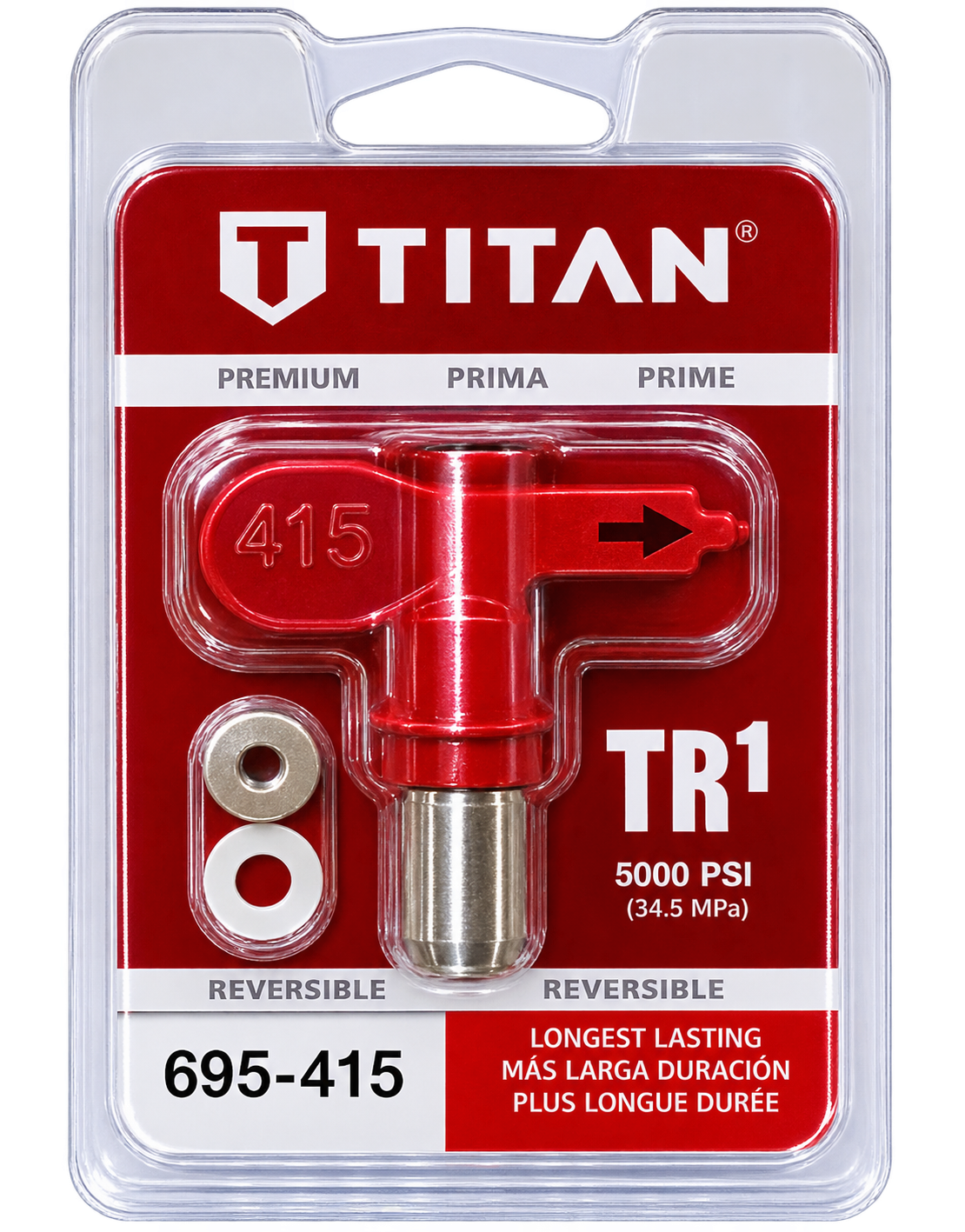
A worn tip has a wider orifice, so pressure falls, the pattern turns coarse or streaky, and more coating is used. The MultiFinish manual's troubleshooting list names a worn or oversized tip as a cause of poor atomization. Fit a new tip before blaming anything inside the machine. The GM 3600 gun uses a 695-415 reversible tip or, on the flat-tip version, the 0526209 AirCoat tip ACF 9/20.
Technique matters as much as parts. Hold the gun square to the surface at a steady distance, start moving before you pull the trigger, release before you stop and overlap each pass by about half the fan. Distance and speed shape the pattern as much as the tip does. Titan's MultiFinish manual also advises using the lowest pressure that atomizes well, so do not raise pressure to cover a worn tip.
Air side on air-assisted machines
On a MultiFinish 440 or AirCoat the atomizing air is part of the pattern. The MultiFinish manual's troubleshooting list gives air pressure that is too low as a cause of poor atomization, and an air regulator set too low as the cause when the compressor runs but delivers too little air. Turn the regulator up before buying anything.
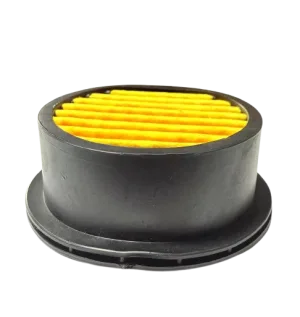
If the setting is right and air is still weak, the parts on the Compressor Assembly page are next: the 0524378 compressor filter element, the gauge (0524570) and the relief valves (0524571, 0551361). The manual also names a blocked or faulty pressure relief solenoid among the reasons the compressor does not start, and the 0524544 solenoid is on the same page. Our post on compressor and drive faults covers that side in detail.
Fluid side: filters, then valves and packings
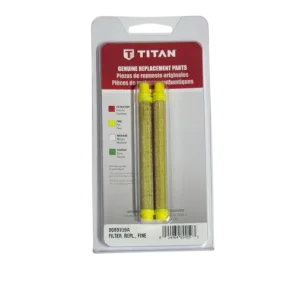
- Gun filter: the 0089959 100 mesh filter sits in the GM 3600 gun, with its filter body (0394610).
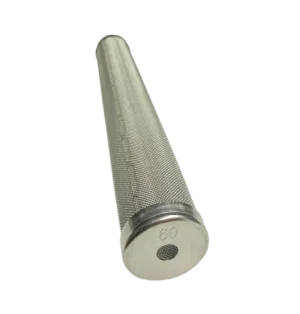
- Manifold filter: the 730-067 60 mesh manifold filter on the MultiFinish fluid section.
- FlexSpray suction filters: 0529916 fine, and 0529915 coarse in a 5 pack, on the corded Handheld.
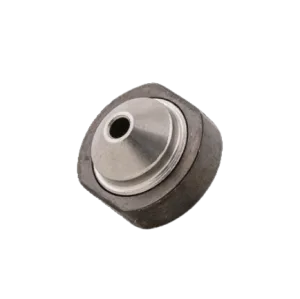
- Pump valves: inlet and outlet valve balls and seats on the MultiFinish are 762-145, 50164, 762-137 and 704-558. Worn valves cause pulsing, lost pressure or failure to prime.
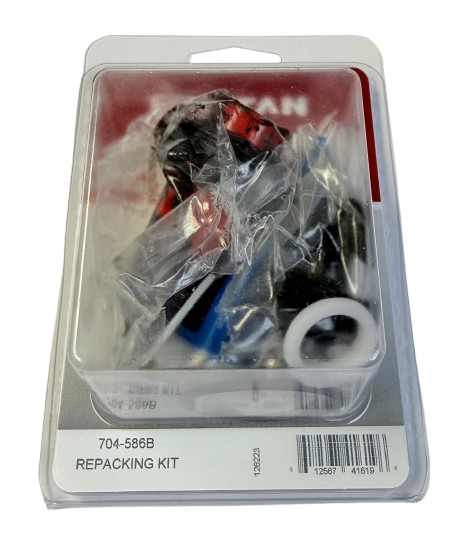
The Fluid Section page also lists the 704-586B repacking kit. Worn packings show as leaking at the wet cup, paint in the wet cup or pressure that will not hold, which is a different set of symptoms from a rough pattern. If you only have pattern trouble, the filters and valves come first. We have no Titan figure for packing life, so replace on symptoms.
Gun parts and seals
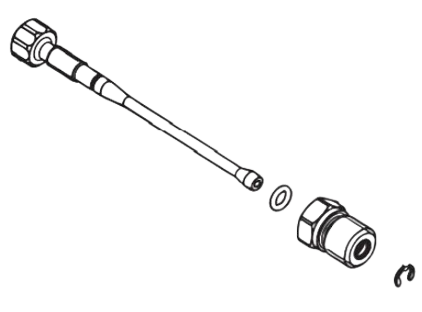
On the GM 3600 gun page, the 0524278 air valve assembly is the gun's air-side part, and the seal (0394608) and O-ring (9971445) are its sealing parts. On the FlexSpray Handheld the 0529921 nozzle seal and the 0529920 air tube and valve seal kit are the leak-related items.
For the corded FlexSpray, Titan's manual lists little or no flow as a clogged nozzle, a clogged or loose suction tube, a flow setting that is too low, or too little pressure building in the container. It also says never to clean the nozzle or air holes with sharp metal objects, which can damage the opening.
When to stop and read the manual
If the tip is new, the filters are clean, the air setting is right and the pattern is still poor, stop swapping parts and open the manual for your model. The manuals are on our manuals page. If you want a second opinion, call (713) 931-0006 with the model and serial number and tell us what the pattern looks like.
Parts that most often fix a pattern problem on a fine finish sprayer:

The Short Version
Strain the coating, clean the filters, fit a new tip, set the air correctly, and only then look at gun seals, pump valves and packings. Each step costs less than the one after it.
Pattern still poor after the checks?
Call (713) 931-0006 with your model and serial number and our parts team will help you narrow it down.
(713) 931-0006Order by Parts Diagram