The types differ in how they break paint into droplets. Airless forces paint through a small tip at very high fluid pressure and covers large surfaces fast. HVLP uses a high volume of low-pressure air for a finer finish with less bounce-back. Air-assisted airless adds air to an airless pump, and compressed-air sprayers suit small to medium work. None is best for every job.
Pick the technology first and the model second. A sprayer that is ideal for a fence is the wrong tool for a set of kitchen cabinets, and the reverse is just as true. This guide compares the four types by how they atomize paint, how much overspray they throw, the finish they leave and the jobs they suit. The guidance comes from Wagner and Titan; where a source gives a figure, we say whose it is.
Airless
An airless sprayer uses no air to break the paint up. A pump forces the coating through a small tip at very high fluid pressure, and the pressure alone atomizes it into a fan. Wagner puts that pressure at 1200 to 3300 psi or higher. The tip's orifice sets how much paint comes out and its fan angle sets how wide the pattern is, so changing the tip changes the job.
The strength of airless is speed over area. Wagner lists medium to large work: a home exterior, a fence, a deck, a barn, interior walls and ceilings, unfinished rooms. The cost is overspray. Wagner says airless produces more overspray than HVLP, so anything that must stay clean needs covering.
Airless machines come in several drive types. Electric units suit sites with power, gas units give portability where there is none, and hydraulic-drive sprayers are built for high-volume, heavy and protective coatings. Browse them on the electric airless sprayers and gas airless sprayers pages.
HVLP
HVLP stands for high-volume, low-pressure. A turbine supplies a large volume of air at low pressure, and that air atomizes the coating. Wagner and Titan both describe the result the same way: a finer finish with less bounce-back than airless, at the price of slower coverage. Wagner places HVLP in small to medium work: small decks, rooms, furniture, cabinets, trim and crafts.
An HVLP gun is set up around the material. The needle, nozzle and air cap have to suit the viscosity of what you are spraying, and the gun should be cleaned immediately after use, because fine passages clog fast once the coating dries. Titan notes that an HVLP pattern is adjustable, which is part of why it is used on detail work.
Air-assisted airless
Air-assisted airless sits between the two. It keeps an airless pump but adds a small amount of air from a compressor, so the fluid pressure can be lower and the pattern softer. Titan describes it for cabinets, furniture, doors, trim and small metal finishing, and says it handles latex, alkyd and lacquer.
Think of it as the choice when you want production speed that is closer to airless but a finish closer to HVLP. It needs a compressor in addition to the sprayer, which is a real extra item to own and set up.
Pneumatic (compressed-air) sprayers
Pneumatic sprayers run on compressed air and, per Wagner, suit small to medium work: furniture, cabinets, trim and automotive. They overlap with HVLP in the jobs they handle. The research behind this guide does not give a verified pressure or overspray comparison for them, so check the sprayer's own specifications before you assume either.
Side by side
How the four types compare (Wagner and Titan guidance)
| Type | How it atomizes | Overspray | Finish | Suits |
|---|---|---|---|---|
| Airless | Fluid forced through a small tip at very high pressure, no air | More than HVLP (Wagner) | Production finish, tip-dependent | Medium to large: exteriors, fences, decks, walls, ceilings |
| HVLP | A high volume of low-pressure turbine air | Less bounce-back (Wagner, Titan) | Finer | Small to medium: rooms, furniture, cabinets, trim |
| Air-assisted airless | Airless pump plus a little compressor air | Softer pattern at lower line pressure (Titan) | Fine | Cabinets, furniture, doors, trim, small metal |
| Pneumatic | Compressed air | Not verified here | Not verified here | Small to medium: furniture, cabinets, trim, automotive (Wagner) |
Figures and job lists are the sources' own guidance, not tests by us. Always check the coating's data sheet for what it can be sprayed with.
Matching the type to the job
- Big surface, speed matters: airless. Expect to mask and cover for overspray.
- Cabinets, doors, trim, furniture: HVLP, air-assisted airless or an airless gun with fine-finish tips.
- Mixed work: an airless unit handles the large areas; add a fine-finish option only if the small work needs a smooth finish.
- No power on site: look at gas airless rather than a different atomizing type.
Whatever you choose, the safety rules for airless carry over to any high-pressure unit: read the manual for your exact model, relieve pressure as it describes before servicing, and keep the tip guard on and the trigger lock engaged when not spraying. Sprayers and parts by model are on the Titan paint sprayers page, and fine-finish options are on the fine finish paint sprayers page.
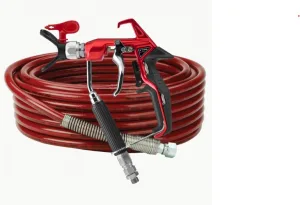
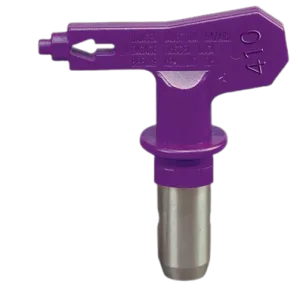
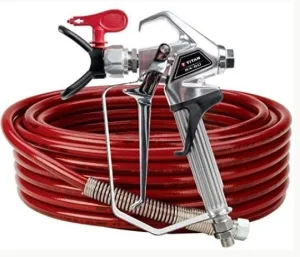
Examples from the catalog, covering electric airless, a high-efficiency airless kit and fine-finish tips:

 −16%
−16%

The Short Version
Airless is for speed on large surfaces and gives more overspray. HVLP and air-assisted airless trade speed for a finer finish. Compressed-air sprayers suit small to medium work. Decide the type from the job, then choose the model.
Not sure which sprayer type fits your project?
Call (713) 931-0006 with the job you have in mind and our parts team will point you to the right page.
(713) 931-0006Order by Parts Diagram