
On the older Elite G40 and G55, a clutch engages a piston-type fluid section, so you deal with packings, seals and a piston rod. On the Elite 3500 and 4500, Titan says PermaStroke has no piston, packings or clutch to replace and names the inlet and outlet valves as the only wear parts.
Two designs under one Elite name
The gas Elite sprayers on our site look similar on a job, but they are built differently. Titan's owner's manual 313-485 covers the Elite G40 and G55. It describes a clutch that engages the pump and a maximum working pressure of 3000 psi (210 bar). The Elite 3500 and 4500 use Titan's PermaStroke Technology, which works across 300 to 3300 psi. Titan's wording is that the 3500 has no piston, packings or clutch to replace, and that the 4500 has no pistons, packings, cylinders or clutch.
That difference decides what you stock and what you replace. It also means the two designs do not share a diagram, so the part you need is on one set of pages or the other.
What the G40 and G55 diagrams show
The older pair drives the pump through a clutch. On the G40 gear box page the clutch shows up as the 763-522 clutch rotor, next to the pressure control knob, a toggle switch and a thrust washer. The G40 engine page adds a clutch inspection plug, 764-018.
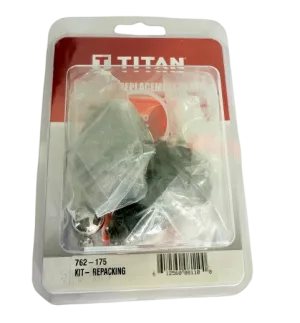
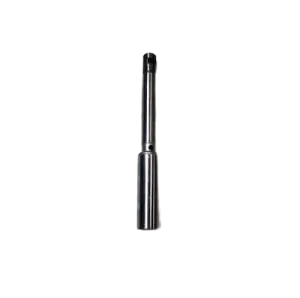
Behind that sits a conventional piston-pump fluid section. The G40 fluid section page lists a 762-175 repacking kit, a lower seal (762-103) and PTFE O-ring (762-057), and an inlet valve ball (762-145). The G55 page lists a 761-117 piston rod, so that is where you look for a rod. The numbers differ between the two models (762- on the G40, 761- on the G55).
The general rules for a piston pump apply here. The piston rod moves through packings, and worn packings show up as leaking, paint where it should not be, or pressure that will not hold. A scored rod destroys new packings, which is why the rod is worth inspecting whenever you repack. Titan's manual also says never to run the sprayer for more than 10 seconds without fluid, because it wears the packings. Follow the manual for the repacking procedure itself.
What the 3500 and 4500 diagrams show
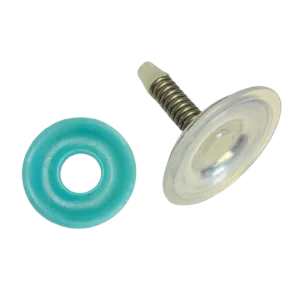
The PermaStroke pump pages look very different. The 3500 pump assembly page lists a 340241 diaphragm assembly and a 2343682 planetary gear set. The 4500 pump assembly page lists a 2419185 diaphragm assembly and a 2389127 hydraulic housing.
One source describes the design this way: the engine drives a hydraulic pump through planetary gears, a piston moves hydraulic oil beneath a diaphragm, and the diaphragm draws material in through the inlet valve and pushes it out through the outlet valve. The diagrams are consistent with that, since they list the diaphragm, housing and gears. They also list a piston (2333996 on the 3500, 2401832 on the 4500), which in that description is the part that moves the hydraulic oil. We do not give oil type, quantity or change intervals, so use your manual for those.
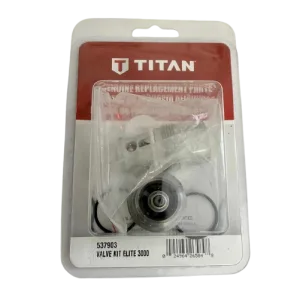
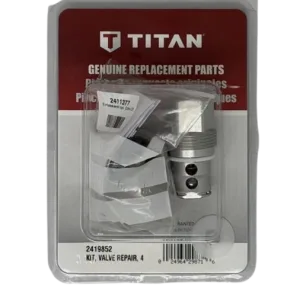
What Titan names as the wearing parts is short: the inlet and outlet valves, which it says are field serviceable with common tools. The site lists a valve repair kit for each model, 537903 for the 3500 and 2419852 for the 4500. We do not state what is in a kit or how long valves last, because Titan does not publish a service life. Replace on symptoms, and for the 3500 Titan's manual points first at clogged or soiled inlet and outlet valves when pressure or priming goes wrong.
What stays the same in both
- Pressure relief first. Before any service, cleaning or part change, follow the pressure relief procedure in your model's manual.
- Tips and hose. A worn tip widens its orifice, so pressure falls and the pattern turns coarse. Every hose and fitting must be rated for the sprayer's working pressure.
- Filters. Suction, manifold and gun filters block with dried or unstrained coating and cause pressure loss, pulsing and spitting.
- Flush after every job. Dried coating in the pump, hose or gun ruins parts in either design.
- Engine safety. Run and fuel a gas engine outdoors or in ventilated areas, away from ignition sources.
Side by side
Clutch design and PermaStroke design compared
| Elite G40 / G55 | Elite 3500 / 4500 | |
|---|---|---|
| How the pump is driven | A clutch engages the pump (Titan manual 313-485) | Sealed hydraulic with a diaphragm; no clutch |
| Pressure | Maximum working pressure 3000 psi (210 bar) | Maximum 3300 psi, with PermaStroke working from 300 to 3300 psi |
| Packings | Piston-pump fluid section with seals and a repacking kit | Titan says no packings to replace |
| Wear parts Titan names | Titan does not name them; packings, seals and valves are the usual piston-pump wear items | Inlet and outlet valves |
| Gear box and clutch pages | Gear Box and Engine diagrams with the clutch rotor and inspection plug | None; pump assembly pages instead |
| Valve and wetted-end diagrams | Fluid Section and Filter Block | Pump Assembly, Inlet or Pusher Stem, Outlet Valve, High Pressure Filter |
We do not publish delivery, tip size or engine details for the G40 and G55, so those cells are left out on purpose. Check the manual for your model.
Pick the right diagram
Start from the model name on the sprayer. On a G40 or G55, open the gear box and fluid section pages. On a 3500 or 4500, open the pump assembly page and then the valve pages. Do not buy a part from one design for the other: we list no cross-fit between them. Manuals are on our manuals page, and if you cannot tell which design you have, call (713) 931-0006 with the model and serial number.
Parts from both designs:
 −8%
The Short Version
With the G40 and G55 you are looking after a clutch, packings and a piston rod. With the 3500 and 4500 Titan says there is no piston, packings or clutch to replace, and the inlet and outlet valves are the wear parts. Identify the design first, then order from that model's own diagram.
Not sure which design you own?
Call (713) 931-0006 with your model and serial number and our parts team will confirm the right diagram before you order.
(713) 931-0006Order by Parts Diagram